Leonardo Sang Report
Artist's website: http://cargocollective.com/leosang/vrp
shot from Assassin's Creed: Brotherhood from his VRP project
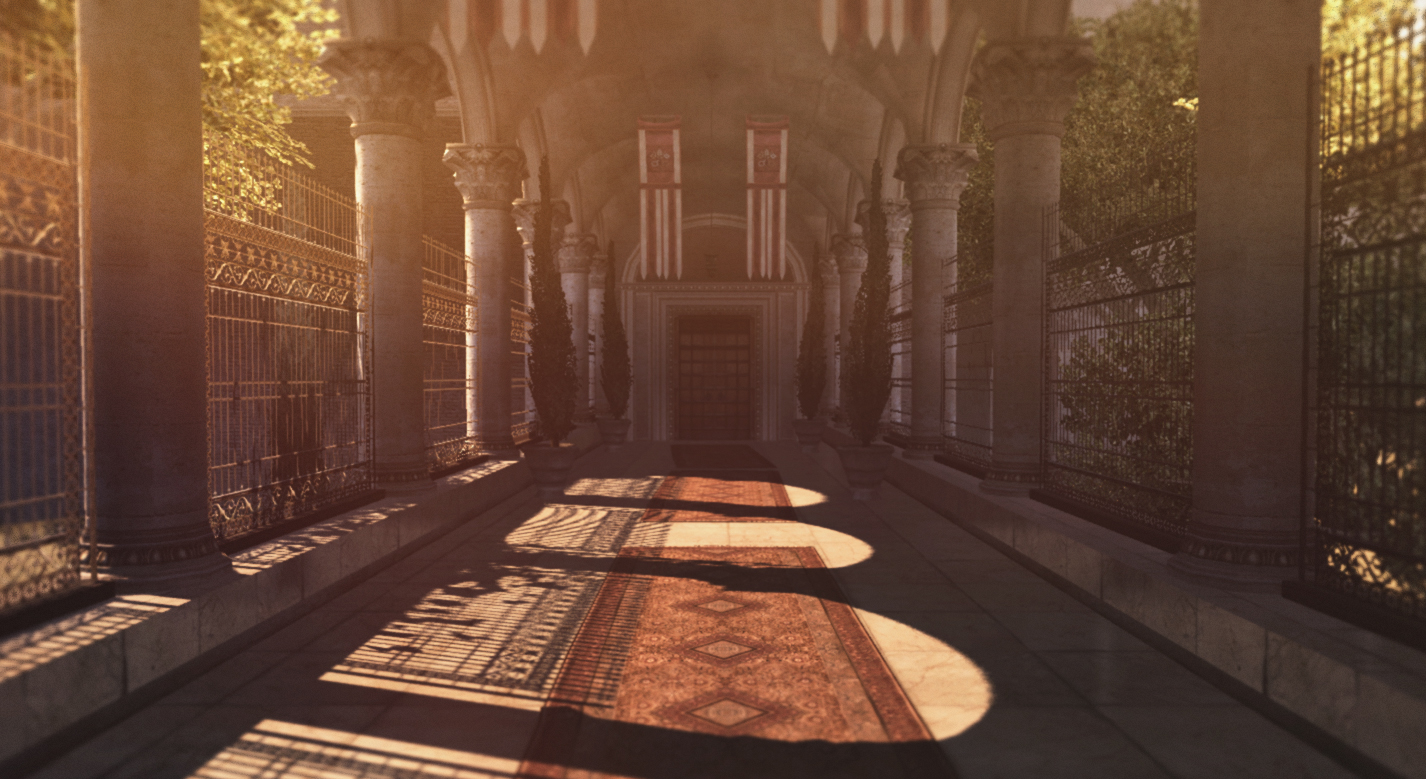
Presentation Summary:
Leonardo Sang is an artist from Brazil, based in Sao Paulo. He works as a graphic designer, photographer and video game photographer, the last of which is my focus. He takes screenshots in games and uses only the most basic editing (changing colors, adding grain, black and white). His pictures are shot and framed the same way as in real life. They're not necessarily designed to be realistic but more just a different way of doing photography; sometimes they're just 'curious shots'. His 'Virtual Reality Photography' (VRP) consists of photos taken in video games, mainly ones he enjoys playing or ones that he likes the aesthetics of. This project was inspired by Robert Overweg's work (also photos taken in virtual space, though his are more sort of glitchy). His 'Battle of Endor, Day 28' consists of photos taken in the Star Wars Battlefront game from the perspective of a freelance war photographer watching the battle. It was inspired by Michael Yon's work and Kent Sheely's project 'DoD', where he played the same role in a different game (Day of Defeat: Source). His 'Backseats in Videogames' project is part of his VPR project, where he takes photos from the 'backseat' of cars in-game. One of the foals of this project was to show how racing games don't have to be about racing and there more of a road-trip vibe to these pictures. I was interested in his work, as I wanted to focus on artists using video games in his work. Morales's work is a cross-section between classic photography and video games, which makes him what I would call a video game photographer. While I personally feel that video games can be art, some people don't agree with that and it's project like this that push that boundary.
Questions and Answers from the Artist:
What inspired you in the first place to start doing photography in video games in the first place?
I always took casual screenshots of the games I played when I was younger, like Counter Strike 1.6, just to capture exciting moments or visually pretty places. My first inspiration to create a full project was the work of Robert Overweg, the way he extends the virtual world to our reality made me think of how these real world concepts can blend into the virtual world of videogames.Do you find there is any real difference in setting up your photograph compared to photography in real life?
Real life photography offers a sort of randomness that video games still cannot offer right now. The mechanical traits of a camera or simply the wilderness of a busy street. However, the video game environment gives us (sometimes) a controlled scenario in which we can take advantage to create something that is not possible in the real world, we can achieve impossible angles or unrealistic physics, all of those make the video game photograph unique.
Has taking photos in video games impacted how you take photos in real life at all?
I try to mimic my photography style into the video game world. Taking pictures in-game actually serves as practice to the real world and vice-versa.


Comments
Post a Comment